Tampilkan postingan dengan label Flower. Tampilkan semua postingan

Kamis, 25 Februari 2016

The Virtues of Violets – Health Benefits of Violets


A few weeks ago, I looked around our 5 acres to see what may be sprouting after a long, cold winter. Soon I saw that my first little escaped and self-sown flowering plant had emerged. Guess which one. Violet! Perhaps cultivated for hardiness as well as beauty, the little johnny jump-up violets (Viola tricolor) had popped up after self-sowing the year before. They beat the dandelions! Now that’s pretty tough for a little violet. The many violets in eastern North America love to cross breed, making their identification difficult (Erichsen-Brown, 1979) with over 40-50 species depending on how you count. “Phew!” “That’s a relief,” I say. Why? When it comes to their medicinal properties, they are, for the most part, interchangeable. So, let’s pick just a few, and we’ll explore the health benefits of violets.

Getting to Know the Violets

The best known violets for medicinal purposes are the European varieties. The most popular is the sweet violet or Viola odorata. It is one of the violets native to Europe and it has been widely cultivated into many forms over the years (Gleason, and Cronquist, 1963). The petals are deep violet and vary to white. The flowers are quite fragrant. V. odorata is best known as a cough remedy especially for bronchitis (Hoffman, 2003).

Sweet violet’s sister is Viola tricolor which is better known by her common name: pansy. She is also a native of the Old World and has been widely cultivated and still is. Like her relatives, V. tricolor has been used as an expectorant, diuretic, and anti-inflammatory. Used both internally and topically, this violet is helpful for cystitis, rheumatic complaints, eczema, psoriasis, acne, and topically for babies with cradle cap (Hoffman, 2003).

Just for the record, who are our native violets? One is Viola papilionacea, and, the other is V.sororia. Both are called the common blue violet. There is also the lesser known V. pedata, the birds foot violet, that should be mentioned. Why? This species was the native plant species widely collected, and provided through the Shaker herbal medicine catalogues published between 1830-1895 (Miller, 1998). Now, this violet is on the threatened species list for New Hampshire and endangered list for New York from its over-harvesting. (USDA Plants Database). It differs by having a bird’s claw shape to its leaves, instead of heart-shaped. If you find this species, don’t pick it! (Instead, please, tell me!)
The common blue violets have deep purple blooms and heart-shaped leaves. These are the little blue violets that we may find in our lawns, (if we allow the grass to grow), and also in meadows and damp woodlands. Both species mentioned above; Viola papilionacea and V. sororia, have the same characteristics as their more popular relatives, as a remedy for coughs, colds and sore throats. These we may wild-harvest, mindfully. (That is, if you find more than 10 plants, then you may harvest 3-4 plants.)

More on Violet Lore and Science
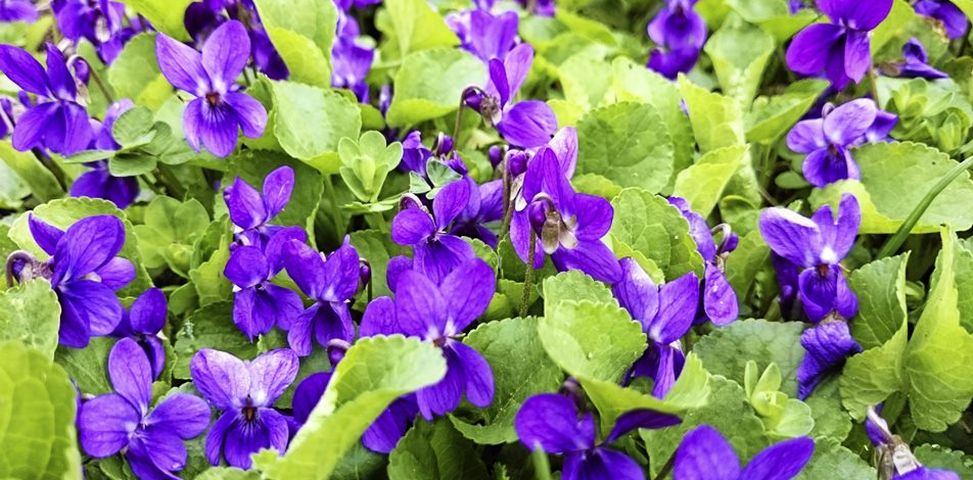
 

The accounts of their uses abound for all the violets. As far back as 1885, a study compared violet leaf vitamin C content to that of oranges and vitamin A content to that of spinach. From the basal leaves, if collected in spring, this early research reported that violets contain twice as much vitamin C as the same weight of orange and more than twice the amount of vitamin A, gram for gram, when compared with spinach! (Erichsen-Brown, 1979).
Early European recipes made syrup of the blossoms and traditionally it was used as a laxative for infants and children (Grieve, 1996). Sweet violet, also, has a long history of use as a cough remedy, especially bronchitis, and functions as an expectorant, as well as an anti-inflammatory (Hoffman, 2003).
Many of the older European-based herbalists, such as Grieve, who first published A Modern Herbal in 1931, and De Bairacli Levy (1973), note that violet has been used, historically, for the treatment of cancer. In America, there are accounts of Native Americans utilizing violet for cancer treatment (Erichsen-Brown, 1979). To my surprise, the American National Cancer Institute has been made aware of the folk uses of violets for cancer since at least the 1950s. (Erichson-Brown, 1979).
Have we studied this herb for further evidence of violet’s potential effects on cancer? Yes! One recent study concluded that an aqueous Viola extract (i.e. tincture) inhibited the proliferation of activated lymphocytes (Hellinger, 2014) as well as negatively affecting other hyper-responsive immune functions. This indicates that violets may be useful in the therapy of disorders related to an overactive immune system (Hellinger, 2014). This little powerhouse-plant is right here, in our back yards!

Violet Blossoms Are to Eat. Violet Leaves Are to Drink.

On the lighter side, violet flowers have been long used as “sweat meats,” by dipping whole flowers in a mixture of melted cane sugar, lemon juice, and egg-white and then dropping them into cold water to “set hard” the sugar coating (Grieve, 1996).
Seasonally-minded local food restaurants that I have visited use violet blossoms to garnish a fresh spring greens salad or a fresh French Sorrel soup. Their petite deep purple blooms draw our attention to look at them mindfully.
Better still, Juliette writes that violet (blossoms and leaves) have been known to have a relaxing effect by “calming deranged nerves, improving weak memory and soothing restlessness” (De Bairacli Levy, 1973). See below for suggestions for herbal combinations for tea.
Violets are virtuous, vivacious, and valuable! Violets are unassuming but oh, so powerful! They herald our early spring blooms in the wild and garden. Their long history of medicinal use begs that we give them more crucial attention and recognition.

How to Use Violets

You can start with making tea! Fresh herbs or dried may be used. A little can go a long way. I usually use 1 teaspoon of dried herbs for a cup of tea or 1 tablespoon per pint or 16 ounces of water. The easiest but less elegant way to brew tea is to put your loose tea into a canning jar, add boiling water and allow it to steep to your desired strength, then strain the herbs. Usually 5-10 minutes of steeping is enough.

Violet Leaf Tea
1 tablespoon of loose tea steeped in 16 ounces of boiling water for about 10 minutes. Strained loose leaves from the jar.

Violet Tea
A Spring Tonic Tea with Violet
Try combining equal amounts of the dried leaves of dandelion, nettle, red clover, violet and mint (peppermint or spearmint). This is a highly nutritious tea.

A Calming Tea with Violet
Combine violet leaves with blue vervain, linden leaf and flower and elderflower. (Garland, 1979) This won’t be sedating but instead will give you an “ahhh” feeling.

Mineral Rich Tea with Violet
Combine violet leaves with alfalfa, horsetail, oatstraw, red clover, hawthorn leaf and flower, chamomile, and raspberry leaves (Soule, 1998). This tea is packed with vitamin C, vitamin A, iron, and calcium.
No side effects or drug interactions have been reported for violets. There are no reported risks for pregnancy or lactation that are noted (Brinker, 2010). Enjoy your violet tea!

Violets are best used as decorative garnishes when it comes to cooking as mentioned above. You may collect a few wild plant blossoms to decorate a salad or garnish a soup. Their blossoms are a beautiful bit of spring to find on your plate or in your bowl.
In the garden, you may want to plant a patch of perennial violets near your entry or add to a perennial border with other plants. Use pansies to circle a small tree in your yard. Or, keep your violets in pots on your sill or deck to admire. They’ll need some shade in the full heat of summer. Keep them watered, and you’ll be able to enjoy them for a good part of the season!

This post was written by Rachel Ross of Hillside Herbals. Rachel grew up between two nature sanctuaries and received a degree in biology and a Masters in Botany. Later, she acquired an RN, and MSN, and is now a practicing Certified Nurse-Midwife. She sees the plants as powerful allies to nourish, strengthen, calm, and heal. Her humble hope is to share this knowing with you.
Photos in this article are provided and copyrighted by Rachel Ross. 

REFERENCES 

  1. Brinker, Francis. (2010) Herbal Contraindications and Drug Interactions plus Herbal Adjuncts with Medicines. Fourth Edition. Eclectic Medical Publications, Sandy, Oregon.
  2. De Bairacli Levy, Juliette. (1973) Common Herbs for Natural Health. Schocken Books. New York.
  3. Erichsen-Brown, Charlotte. (1979) Medicinal and Other Uses of North American Plants; a Historical Survey with Special Reference to the Eastern Indian Tribes. Dover Publications. New York.
  4. Garland, Sarah. (1979) The Complete Book of Herbs and spices. Frances Lincoln Publishers Limited. London.
  5. Gleason, Henry, A., and Cronquist, Arthur. (1963) Manual of Vascular Plants of Northeastern  United States and Adjacent Canada.  D. Van Nostrand Company. New York.
  6. Grieve, M. (1996) A Modern Herbal. Barnes and Noble Books. New York.
  7. Hellinger, R., Koehbach, J., Fedchuck, H., Sauer, B., Huber, R., Gruber, CW., and Grundemann, C., ( 2014)  Immunosuppressive activity of an aqueous Viola tricolor herbal extract.  J. Ethnopharmacol. Jan 10;151(1):299-306.
  8. Hoffman, David. (2003) Medical Herbalism; The Science and Practice of Herbal Medicine. Healing Arts Press. Rochester, Vermont.
  9. Miller, Amy Bess. (1998) Shaker Medicinal Herbs; A compendium of history, lore, and uses. Storey Books. Schoolhouse Rd., Pownal, Vermont 05261.

Senin, 15 Februari 2016

Medicinal Flowers and Their Uses

 Source : www.proflowers.com

For several centuries, medical practitioners have long acknowledged the therapeutic properties of certain flowers. More than just spanning time, this knowledge also spans many cultures around the world. One of the greatest advantages is that flowers and plants offer completely natural medicinal properties, often without the scary side effects that modern pills and medications bring on. Furthermore, remedies made from flowers can be much cheaper than drugs marketed by pharmaceutical companies.


The best places to obtain dried flowers or their essential oils is a herbal health store. Be careful when preparing tonics and other mixtures since some flowers can be very potent. Pregnant or nursing mothers in particular should consult with their doctor before using any essential oils. To learn more about using medicinal flowers for home remedies, have a look at some of the most effective ones below.

Angelica Herb – Remember the green bits of candied angelica used to decorate cakes? It comes from the very same plant as the Angelica flower. Like the rest of the plant, the flower is extremely fragrant and has a number of medicinal uses including digestive disorders and coughs and colds. It can also be given as a strengthening tonic for seniors and children.

Begonia – Begonias can be prepared in several different ways. An infusion made by soaking the flowers in hot water helps to eliminate headaches and rid the body of toxins. The crushed flowers and leaves can also be rubbed directly on the skin to help relieve pain and heal sores or burns.

Bellis Perennis – Also known as the common daisy, this flower holds a wealth of medicinal properties despite its unassuming appearance. When used in an infusion, it acts as a laxative as well as an expectorant to purge the body of toxic matter. It is also used as a home remedy to help treat physical disorders such as arthritis and rheumatism. Direct application to the skin through an ointment or poultice aids in healing wounds.

Black Cohosh – Women should be very careful when using Black Cohosh as it is an extremely potent flower. Black Cohosh can be used as an emmenagogue, which means that it stimulates the uterus. Women with menstrual problems can effectively use low doses of this flower to help regulate their cycles and relieve pain. In the same vein, pregnant women should avoid it since it can bring on a miscarriage or early labor.

Blood Root – This little white flower is very effective in low doses when treating respiratory problems. It can be made into a paste when mixed with other compounds and applied on the skin to treat rashes, warts and various dermic problems. When ingested as a tea or tonic, bloodroot is very effective in cleansing the blood and lowering fevers.

Blue Lobelia – Native Indians used Blue Lobelia as a treatment for syphilis as well as less severe ailments. Tea made with this flower helps to relieve fevers, coughs and colds, and digestive problems.

Butterfly Weed – Also used in Native Indian cuisine, Butterfly Weed is primarily effective in treating respiratory and related lung issues. When ingested in large amounts, it can be used for internal cleansing and pain relief. Direct application to the skin in the form of a poultice can help to reduce swelling or heal wounds.

Calendula – The bright yellow petals of calendula flowers are most effective when mixed with other substances to create ointments or creams. It can then be used on the skin to heal burns, cuts, and wounds.

California Poppy – Don’t worry when using California Poppies since they are not addictive and do not have any opium in the plant. However, it can be used to help reduce anxiety and insomnia, as well as bladder problems in children and adults. California Poppies can be used along with other natural sources over a longer period of time to help with depression and fatigue.

Carnation – When separated from the base of the flower (which is bitter), Carnation petals can be brewed to make an excellent tea to reduce anxiety, agitation, stress and fatigue. Moreover, it also has a healing effect on the skin and can bring down swelling.

Chrysanthemum – Chyrsanthemums are another flower that make a great tea when steeped in hot water. Drinking this tea brings marked relief for those suffering from a fever, headache or common cold. The cooled liquid can also be applied as a compress to soothe tired eyes.

Corn Flower – These distinctive sky-blue flowers have long been used to deliver relief to medical patients. Corn Flower tea acts as a laxative and also as a mouth cleanser. It is safe to consume the flowers in their raw state. A paste made from corn flowers brings relief to acne and tired or irritated eyes.

Dandelion – Dandelions are very effective for cleaning the blood and also helping with related issues, such as anemia. In Native American culture, it was also used as a laxative and a tonic of overall wellbeing.

Foxglove – Used in moderation, foxgloves have proved to be valuable in curing edema (previously known as dropsy). It is also used as a tea to remedy coughs and colds or as a compress for skin swellings or sores.

Gardenia – Gardenias feature heavily in Chinese medicine for blood cleansing and disorders, bladder problems, and physical injuries. It also works on a mental level in helping to alleviate depression, stress, anxiety, insomnia and similar disorders.

Jasmine – Sweet, exotic jasmine flowers do not only make delicious cup of tea, but they also aid in digestive issues, stomach ulcers and ulcers. Sipping this brew before bedtime can help to ward off insomnia and anxiety.

Honeysuckle – Honeysuckle flowers are safe to eat raw and can be used to create an antibacterial gargle wash for sore throats. Skin rashes or inflammation are also effectively treated by applying a paste made from the flowers.

Hyssop– Hyssop has been used as far back as Biblical times and is renowned for its potency against sore throats, bronchitis, congested chests, rheumatism and arthritis. It can also be used to improve circulation of the blood.

Lilac – Lilacs can be steeped to make a tonic that reduces fever and to get rid of internal parasites. Skin burns or wounds are soothed and heal well when a paste or gel made from lilacs is applied.

Lotus – Lotus flowers are popular in both Eastern and Western cultures for their effectiveness against fever, diarrhea and also more serious illnesses such as cholera and bronchitis. A syrup made from the flower provides much relief for bad coughs.

May Apple – May Apples are extremely potent (even toxic) and should be used very carefully, preferably with the supervision of a professional herbalist. A small amount can be brewed as a tea or tonic to make a powerful laxative and can also bring on vomiting.

Morning Glory  – Use caution not to ingest Morning Glory seeds as it could cause strong hallucinatory effects. The flower is used in several cultures as a laxative and general purge. Morning Glory also acts as an emmenagogue to bring on menstruation or labor.

Nasturtium – The anti-microbial properties of Nasturtium makes it an effective remedy against colds and flu. It is also useful in treating infections of the lungs, bladder and reproductive organs.

Passionflower – Passionflower contains medical properties best suited for treating disorders such as insomnia, agitation, anxiety, and epilepsy. It also acts on the nerves to reduce pain and induce a calming sensation.

Peony – Medicinal use of Peonies dates back to the ancient Chinese civilization. Consuming a tonic made from the flower is helpful as a muscle relaxant in cases such as general muscular pain and cramps and also menstrual discomfort.

Plum Flowers – Plum flowers are primarily used in Chinese medicine to free the body from parasites and ulcers. They are also used to boost digestive health.

Rose – Roses contain a good deal of Vitamin C and are very safe for human consumption. The petals can be eaten raw to increase blood circulation, and they also relieve depression. Rose tea acts as a mild laxative. A paste or cream made from the petals does wonders to improve the condition of the skin, especially on the face.

Rosy Periwinkle – Rosy periwinkle has traditionally been given as a tea for diabetes and high blood pressure. It has also made the news in recent years for its beneficial properties towards diseases that include leukemia, cancer and Hodgkin’s Disease.

Snapdragon  – Snapdragon can be used as a gentle sedative and mental relaxant. It is especially useful when battling insomnia or stress.

Sunflower – Consuming a brew made from sunflowers helps greatly with ulcers and menstrual cramps. It can also be used as a wash for gargling in cases of sore throats.

Benefits of Sunflowers

Source : herbal1medicine.blogspot.co.id

 Sunflowers a bright yellow plant, with a large flower head (can reach 30 cm diameter). This flower is actually a compound flower, consisting of hundreds to thousands of small flowers on one button. Sunflower also has a typical behavior, namely the interest is always facing the sun or heliotropisme.

This plant has been cultivated by the Indians of North America for thousands of years ago. Subsequently spread to South America and became a source of food for the citizens of Inka. After the conquest by the Europeans, sunflower was introduced to Europe and around the world in the 6th century. Since the 17th century a mixture of seeds used in breads or as a substitute for coffee and chocolate. Its use as a source of oil began in the 19th century. Seasonal plants from the tropical north America (Mexico), height 3m to 5m depending on the variety. Single leaf width. These rods are usually covered with coarse hair, straight, rarely branched.

Structured compound of sunflowers :
There are two types of flowers: the edge of the flower or flower petal tongue that brings a bright yellow, sterile, tube and flower and produce fertile seeds. This number could reach 2000 tube flower petals in a single bunch of flowers. Open pollination (cross) and assisted by insects. On a sunny day, bunches of compound interest to follow the daily movement of the Sun (the original name of this plant), whose symptoms are called heliotropisme. Plant photosynthetic gain 10% more because of this movement.
Brackets fruits fruit (achene). Hard-walled fruit is somewhat dry and not too thick, it is often mistaken for flowers 'seeds' of the Sun, because it can not be easily distinguished. True seed lies within, are protected by a shell of similar pieces.

There are four groups of flower cultivation for the Sun which is distinguished by its use. Cultivars that are assembled are usually directed at one specific purpose only.

  1. Group of oil, seed oil is used. Seeds of this group has a thin seed shells. Oil content ranged from 48% to 52%. To produce one liter of oil from the seeds required about 60 bunches of compound interest
  2. Groups of animal feed, leaf harvested as feed or green manure.
  3. Groups of ornamental plants, which have different petal colors and has many flowering branches,
  4. Group of watermelon seeds, to harvest the seeds as food.
Contents of sunflower :
  1. Flowers efficacious as antipyretic, hypotensive, lowering blood pressure, reduce pain (analgesic), painful menstruation (dysmenorrhoe), abdominal pain (stomach pain), headache, toothache, abdominal pain, high blood pressure, inflammation of the breast (topical) , arthritis (topical), cosmetics (to prevent premature aging), and forced labor.
  2. Efficacious as an anti-inflammatory, analgesic, diuretic antitussive, cough, kidney stones, bronchitis, leucorrhoea (leucorrhoe), anti-inflammatory, urine laxative, cough, and pain in the roots.
  3. Leaves efficacious as anti-inflammatory, analgesic, antipyretic anti-inflammatory, reduces pain, and anti-malaria.
  4. Anti nutritious seeds as dysentery, arouse appetite, lethargy, headaches, bloody dysentery, stimulate the secretion of body fluids (hormones, enzymes, etc..), Induced stimulation of measles (measles).
As mentioned in the cultivation of the group, especially the use of sunflower oil is a source of food and industry. As food, sunflower oil suitable for frying, thicken, and salad mix. Sun flower oil is rich in linoleic acid (C18: 2), unsaturated fatty acids are good for human health.


Interests like the oil technique with high levels of oleic acid is higher and there is also a sunflower cultivars that produce oil with such quality (containing 80% to 90% oleic acid, while the cultivar for food has only 25% oleic acid). Derived from pumpkin seeds sunflower seeds contain vitamin B1 (thiamin), vitamin B5, vitamin E, folic acid, and various minerals such as manganese, phosphorus, selenium, potassium, calcium, sodium, magnesium, copper.

The content of vitamin E in that it helps maintain healthy skin (smooth and help cell regeneration), healthy hair, and eyes. Not only that, vitamin E is also beneficial to enhance the detoxification of the body, prevents cancer, reduces asthma, osteoarthritis, rheumatoid arthritis, reducing risk of colon cancer, diabetes complications, and reduce levels of bad cholesterol (LDL) in blood.

Meanwhile, magnesium help nerve function, prevent bone loss and prevent muscle spasms.
Selenium is beneficial for lowering blood pressure, prevent headaches or migraine, and may reduce heart disease and stroke.

Sunflower seeds can also be processed into vegetable oil with olive oil, so it can be widely used as a substitute for vegetable oil. The best quality oils obtained from seeds of varieties of black oil content ranged from 50 to 60 percent.
The women usually already know some of the properties of vitamin E such as for skin regeneration,smoothes and makes your skin more youthful and beautiful. But vitamin E has many functions and other properties are very important.

Vitamin E is an antioxidant which is important for the body. Spread throughout the body to neutralize free radicals that can damage cells and also repair damaged DNA structure. Requirement for vitamin E can reduce the symptoms of asthma, osteoarthritis and rheumatism. It has also been reported to reduce the risk of colon cancer, lower levels of symptoms of heartburn is often experienced by menopausal women, and reduce the complications of diabetes.
Vitamin E is also known to help fight cholesterol much cholesterol (LDL) in blood. And some research suggests that increased consumption of vitamin E can boost the immune system.
Rich in Magnesium, Selenium, and Copper.

Magnesium is needed for healthy bones and energy production. Approximately two-thirds of the body's magnesium is found in our bones. Some are used to strengthen bone structure, and the rest is stored in the bone surface that can "grab" at any time if needed. Magnesium works to balance the body's calcium, which helps to relax muscles and nerves, and prevent muscle spasms. Several studies have shown that magnesium helps reduce the symptoms of asthma, blood pressure, and prevent headaches / migraines, but also reduces the risk of heart disease and stroke.

Selenium, along with vitamin E, helps maintain healthy skin, hair and eyes as well. It is also believed to enhance the detoxification of the body and help prevent cancer.

Copper is needed for blood and bone formation, production of melanin pigment of skin and hair, and the release of energy from food.

Folic acid for the fetus:
For women who want to become pregnant, should consume lots of foods containing folic acid (folic acid) at least two months before planning a pregnancy. Folic acid is essential for the formation and development of red blood cells and brain cells in the fetus begins to form at 3-4 weeks of pregnancy. Folic acid is also known to protect against the risk of babies born with neural tube defects and the blood levels of homocysteine. High homocysteine
​​levels are known as risk factors for heart disease.
Folic acid deficiency are at risk of babies born with neural tube cable / brain and spinal cord.

In addition to those mentioned above, seed sunflower also contains various vitamins and minerals such as vitamin B1 (thiamin), vitamin B5, manganese, and phosphorus.
During these sunflower seeds pumpkin seeds are known as material. Whereas sunflower seeds actually have a rich nutrient content that can not be underestimated. On sunflower seeds contain protein, phosphorous, fat, magnesium, iron and potassium.

Levels of fat in sunflower seeds reached 50%, when we mix with milk and processed products, sunflower seeds can full food for the body's cells. If the crushed sunflower seeds will remove the oil, this oil contains acids likolat useful for reducing cholesterol deposits on artery walls.

Consume oil from sunflower seeds to eat a lot healthier than butter-fat solids. Iron content in it is able to prevent anemia without making us fatter. Suitable for those who are dieting but do not want to get anemia.

A diabetes meal plan is a guide that tells you how much and what kinds of food you can choose to eat at meals and snack times. A good meal plan should fit in with your schedule and eating habits. - See more at: http://www.diabetes.org/food-and-fitness/food/planning-meals/diabetes-meal-plans-and-a-healthy-diet.html#sthash.2QzYZmbQ.dpuf
What is a Diabetes Meal Plan?

What is a Diabetes Meal Plan?

A diabetes meal plan is a guide that tells you how much and what kinds of food you can choose to eat at meals and snack times. A good meal plan should fit in with your schedule and eating habits.
Some meal planning tools include:
  • The plate method
  • Carb counting
  • Glycemic index.
The right meal plan will help you improve your blood glucose, blood pressure, and cholesterol numbers and also help keep your weight on track. Whether you need to lose weight or stay where you are, your meal plan can help.
Looking for meal plans? Sign up for our Recipes for Healthy Living resource. It's free!
People with diabetes have to take extra care to make sure that their food is balanced with insulin and oral medications (if they take them), and exercise to help manage their blood glucose levels.
This might sound like a lot of work, but your doctor and/or dietitian can help you create a meal plan that is best for you. When you make healthy food choices, you will improve your overall health and you can even prevent complications such as heart disease and some cancers.
There are many ways to help you follow your diabetes meal plan. Some ways are Creating your Plate or Carbohydrate Counting. These two meal planning methods are different but hopefully one is right for you.

What is a Healthy Diet?

A healthy diet is a way of eating that that reduces risk for complications such as heart disease and stroke.
Healthy eating includes eating a wide variety of foods including:
  • vegetables
  • whole grains
  • fruits
  • non-fat dairy products
  • beans
  • lean meats
  • poultry
  • fish
There is no one perfect food so including a variety of different foods and watching portion sizes is key to a healthy diet. Also, make sure your choices from each food group provide the highest quality nutrients you can find. In other words, pick foods rich in vitamins, minerals and fiber over those that are processed.
People with diabetes can eat the same foods the family enjoys. Everyone benefits from healthy eating so the whole family can take part in healthy eating. It takes some planning but you can fit your favorite foods into your meal plan and still manage your blood glucose, blood pressure and cholesterol.
- See more at: http://www.diabetes.org/food-and-fitness/food/planning-meals/diabetes-meal-plans-and-a-healthy-diet.html#sthash.2QzYZmbQ.dpuf

What is a Diabetes Meal Plan?

A diabetes meal plan is a guide that tells you how much and what kinds of food you can choose to eat at meals and snack times. A good meal plan should fit in with your schedule and eating habits.
Some meal planning tools include:
  • The plate method
  • Carb counting
  • Glycemic index.
The right meal plan will help you improve your blood glucose, blood pressure, and cholesterol numbers and also help keep your weight on track. Whether you need to lose weight or stay where you are, your meal plan can help.
Looking for meal plans? Sign up for our Recipes for Healthy Living resource. It's free!
People with diabetes have to take extra care to make sure that their food is balanced with insulin and oral medications (if they take them), and exercise to help manage their blood glucose levels.
This might sound like a lot of work, but your doctor and/or dietitian can help you create a meal plan that is best for you. When you make healthy food choices, you will improve your overall health and you can even prevent complications such as heart disease and some cancers.
There are many ways to help you follow your diabetes meal plan. Some ways are Creating your Plate or Carbohydrate Counting. These two meal planning methods are different but hopefully one is right for you.

What is a Healthy Diet?

A healthy diet is a way of eating that that reduces risk for complications such as heart disease and stroke.
Healthy eating includes eating a wide variety of foods including:
  • vegetables
  • whole grains
  • fruits
  • non-fat dairy products
  • beans
  • lean meats
  • poultry
  • fish
There is no one perfect food so including a variety of different foods and watching portion sizes is key to a healthy diet. Also, make sure your choices from each food group provide the highest quality nutrients you can find. In other words, pick foods rich in vitamins, minerals and fiber over those that are processed.
People with diabetes can eat the same foods the family enjoys. Everyone benefits from healthy eating so the whole family can take part in healthy eating. It takes some planning but you can fit your favorite foods into your meal plan and still manage your blood glucose, blood pressure and cholesterol.
- See more at: http://www.diabetes.org/food-and-fitness/food/planning-meals/diabetes-meal-plans-and-a-healthy-diet.html#sthash.2QzYZmbQ.dpuf